Budget Planning for Debt Payoff: The Ultimate 2026 Guide
Create a budget that accelerates debt payoff. Learn the 50/30/20 rule, zero-based budgeting, and AI-powered strategies to find extra money in 2026.
Founder of Smart Debt Flow. Building transparent debt management tools with AI coaching and BNPL tracking.
Why Budgeting Is the Foundation of Debt Payoff
You cannot consistently pay down debt without knowing where your money goes each month. A budget is not a restriction; it is a plan that gives every dollar a purpose. Tracking spending can reveal hidden cash flow that you may be able to redirect toward debt, and it can prevent the all-too-common pattern of paying down a credit card only to charge it back up because everyday expenses were not accounted for. Think of your budget as the engine that powers your payoff strategy.
The 50/30/20 Rule for Debt Payoff
Senator Elizabeth Warren popularized the 50/30/20 framework in her book "All Your Worth." The rule allocates 50% of after-tax income to needs such as housing, groceries, insurance, and minimum debt payments. Another 30% goes to wants like dining out, entertainment, and subscriptions. The remaining 20% is directed toward savings and extra debt payments. When you are focused on paying off debt aggressively, you can temporarily shift the ratio to 50/20/30, cutting wants to 20% and boosting your debt payoff allocation to 30%. This adjustment can shave months or even years off your repayment timeline.
Zero-Based Budgeting: Every Dollar Has a Job
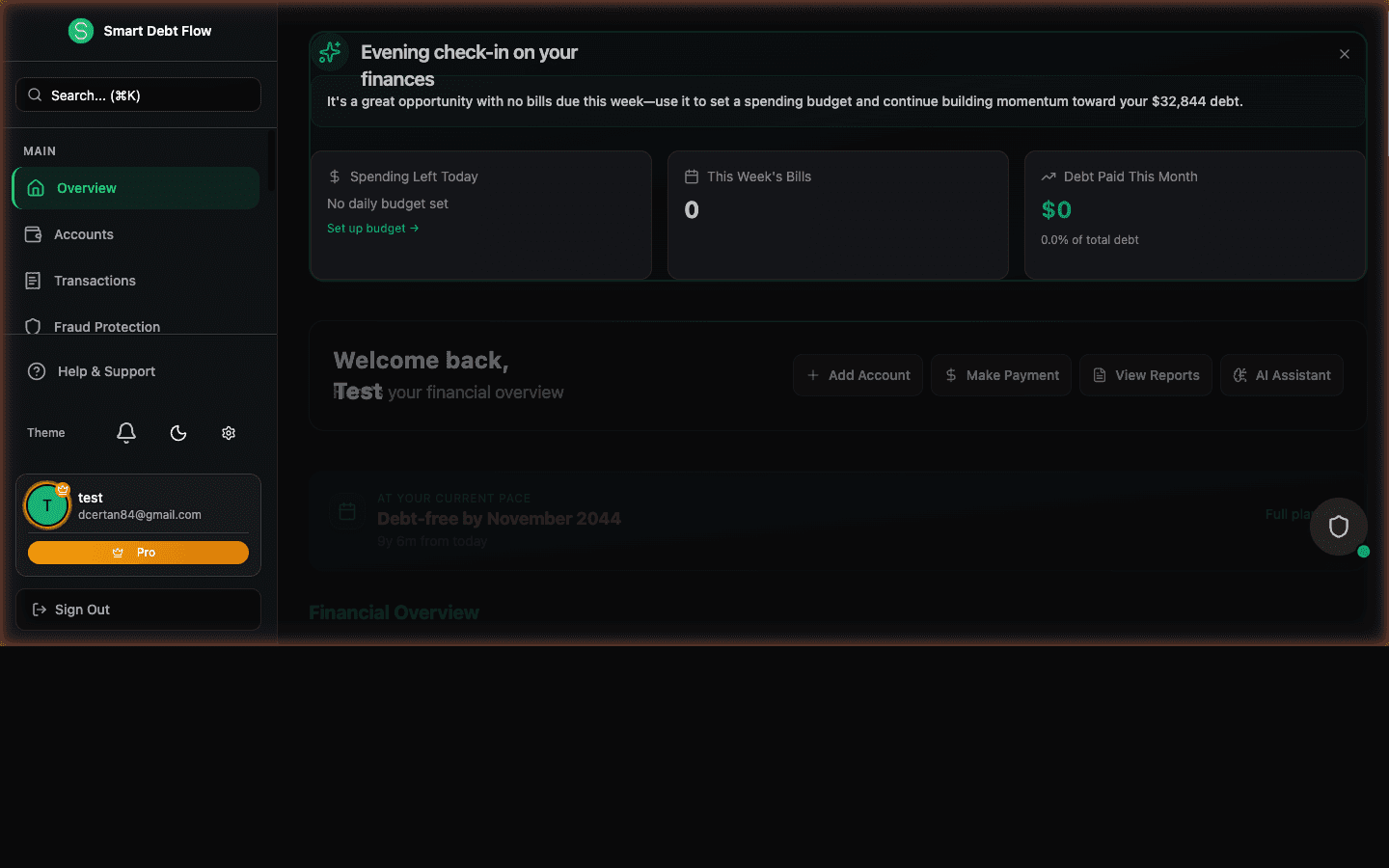
Zero-based budgeting takes a more granular approach: you assign every single dollar of income to a specific category until your budget balances to zero. Income minus all planned spending, saving, and debt payments should equal exactly zero. This method forces you to be intentional about discretionary spending and eliminates the vague "leftover" money that often disappears into impulse purchases. Apps like Smart Debt Flow can automate this process by categorizing your transactions and showing exactly how much is unallocated at any point in the month. The key is reviewing and adjusting your categories weekly, not just once when you set it up.
Finding Extra Money for Debt Payments
Most households can find $200 to $500 per month in savings without a dramatic lifestyle change. Start by auditing subscriptions; the average American spends over $200 per month on recurring services they rarely use. Negotiate your cell phone, internet, and insurance bills, because providers routinely offer retention discounts when you ask. Meal planning and cooking at home can save $300 or more per month compared to frequent takeout. Sell unused items through online marketplaces and direct the proceeds straight to your highest-priority debt. Even small wins of $20 or $50 add up significantly when applied consistently over 12 to 24 months.
Automating Your Debt Payoff Budget
Automation removes willpower from the equation and ensures your debt payments happen on schedule every month. Set up automatic transfers from your checking account to each debt on the day after payday. Many lenders allow you to specify an amount above the minimum, so you can automate your extra payments as well. Use your budgeting app to send alerts when spending in a discretionary category approaches its limit. The combination of automated payments and real-time spending alerts creates a system that works even when you are busy, tired, or tempted to skip a month.
Adjusting Your Budget as Debts Are Paid Off
As you eliminate individual debts, resist the urge to absorb the freed-up payment into general spending. Instead, roll that entire amount into the next debt on your list, accelerating your payoff with each milestone. This is the core mechanism of both the Snowball and Avalanche methods. Once all high-interest debt is gone, reallocate those funds toward building a three-to-six-month emergency fund, then shift to investing for retirement. The budgeting discipline you built during debt payoff becomes the foundation for long-term wealth building. Review your budget quarterly to ensure it reflects changes in income, life circumstances, and financial goals.
RELATED TOPICS
Continue Reading
Ready to Apply What You've Learned?
Use Smart Debt Flow's AI-powered tools to implement these strategies and achieve your financial goals faster.
Disclaimer: This article is for educational purposes only and does not constitute financial advice. Financial strategies should be tailored to individual circumstances. Consult with a certified financial planner or advisor for personalized recommendations.
Last Updated: March 21, 2026